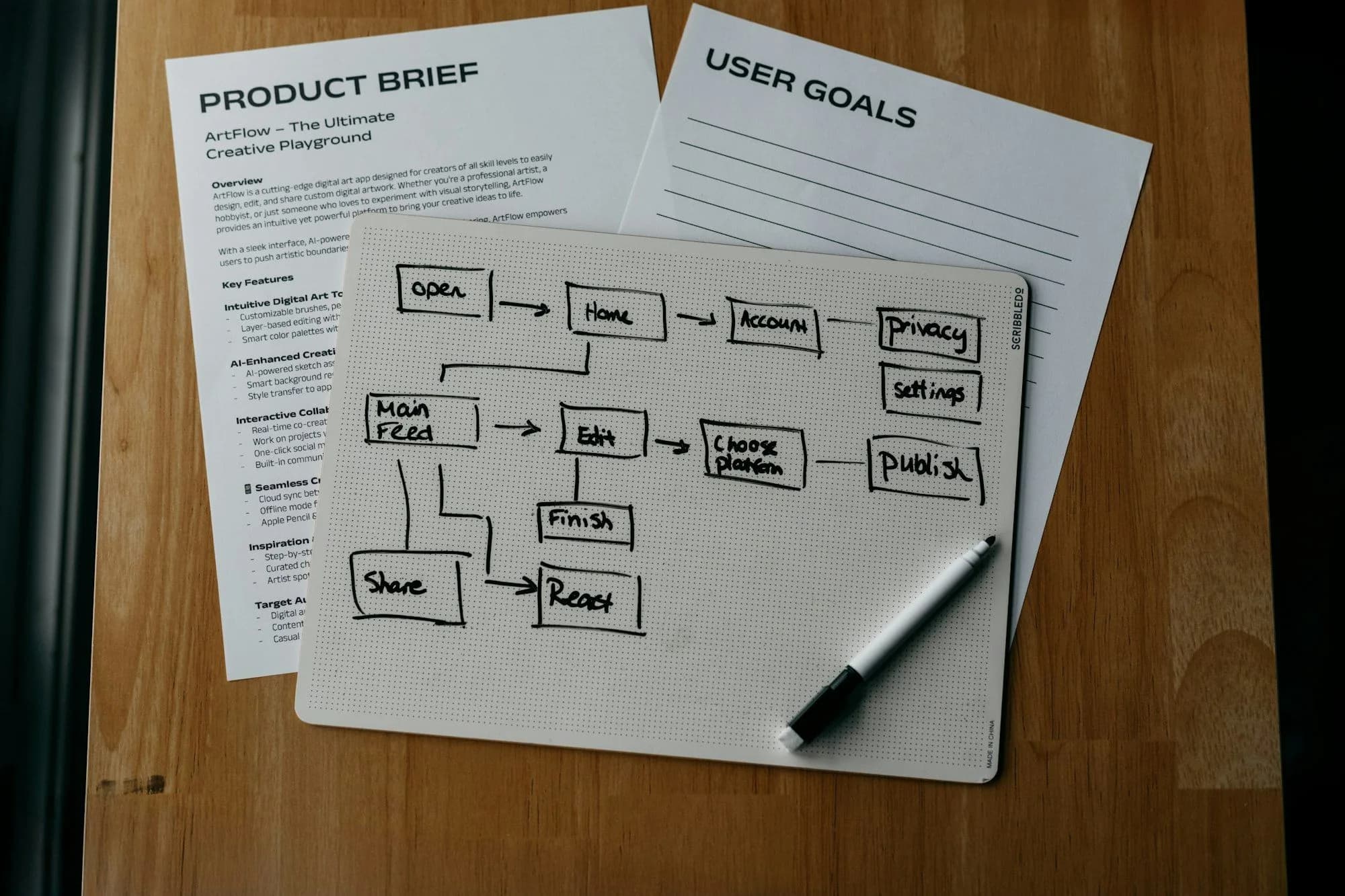
AI automation is software that carries out a repeat business task on its own and uses an AI model for the steps that need judgement, such as reading a message, sorting a request or drafting a reply. For a small business in Pakistan, it means orders, enquiries and follow-ups get handled in minutes without extra staff.
How is AI automation different from normal automation?
Normal automation follows fixed rules: when a form is submitted, add a row to a sheet and send a thank-you email. It works well when every case looks the same. It breaks when the input is messy, such as a customer who writes "is the blue one in medium still there, and can you deliver to Multan by Friday?"
AI automation adds a step that understands language. An AI model reads that message, works out that it is a stock question plus a delivery question, and passes each part to the right next step. The rest of the workflow still runs on fixed rules. That mix of fixed steps and one or two smart steps is what most businesses actually use.
Normal automation | AI automation | |
|---|---|---|
Follows | Fixed if-then rules | Fixed rules plus one or more AI steps |
Handles messy input | No, it needs clean, predictable data | Yes, it can read free text, emails and chats |
Typical job | Copy a form entry into a sheet | Read an enquiry, label it and draft a reply |
Main risk | Breaks when the input changes | Can misread or invent, so needs checks |
Cost | Tool plan only | Tool plan plus AI usage |
How does an AI automation work, step by step?
Almost every AI automation, from a shop to a clinic, has the same six parts:
- Trigger: something happens, such as a new order, email, form entry or WhatsApp message.
- Collect: the workflow pulls in the details it needs, such as the customer’s name and message.
- Understand: an AI step reads the text and returns something simple, such as a label or a short draft.
- Decide: fixed rules route the work based on that label, for example sales to one person and complaints to another.
- Act: the workflow updates a sheet, sends a message or creates a task.
- Check and log: a person approves anything a customer will see, and every run is recorded so mistakes can be traced.
Only step 3 uses AI. Keeping the AI to one narrow job is what makes the whole workflow reliable.
What does it look like in a Pakistani small business?
- An online clothing shop: a new order triggers a WhatsApp confirmation, a courier booking and a row in the stock sheet. Customer questions get a drafted answer for the owner to approve.
- A clinic or salon: appointment requests from a form or chat are read, sorted by service and added to a calendar, with a reminder sent the day before.
- A real estate agent: enquiries from property portals and Facebook are read, scored by budget and area, and sent to the right agent with a summary.
- An accounting or tax practice: client documents arriving by email are sorted, renamed and filed in the right folder, and missing items trigger a polite reminder.
- A freelancer: new leads from a website form get a tailored first reply and a follow-up if they go quiet.
Why does it matter for small businesses now?
Small businesses in Pakistan usually run on the owner's time. The same few people answer WhatsApp, confirm orders, chase payments and update records. Every hour spent copying data between apps is an hour not spent on sales or service. Automation hands the repeat work to software, so a small team can handle more customers without hiring before it can afford to.
It also improves speed. A buyer who gets a reply in two minutes is more likely to order than one who waits until evening. Automated confirmations and reminders cut missed appointments and refused cash on delivery orders, which are real costs for local businesses.
What tools are used for AI automation?
Most small-business automation is built with no-code tools that connect apps together. The three most common are Zapier, Make and n8n. All three now let you add AI steps and even AI agents to a workflow:
- Zapier has a free plan with 100 tasks a month and two-step workflows, which is enough to learn on (Zapier pricing).
- Make lets you build AI agents on the same visual canvas as your other workflows (Make AI Agents).
- n8n describes an AI agent as a chain that knows how to make decisions, using a language model to choose which actions to take (n8n docs).
Around these sit the apps you already use: WhatsApp Business, Gmail, Google Sheets, Shopify or WooCommerce, and an AI model such as ChatGPT, Claude or Gemini for the language steps.
What does AI automation cost a small business?
You can learn and run small workflows for free, then pay as volume grows. Entry points on the official pricing pages on 27 September 2026:
Tool | Free option | Entry paid plan |
|---|---|---|
Zapier | 100 tasks a month, two-step Zaps | Professional from $19.99 a month billed yearly, 750 tasks |
Make | 1,000 credits a month | Core from $9 a month, 10,000 credits |
n8n | Free Community Edition if you self-host | Starter cloud plan, €20 a month billed yearly, 2,500 runs |
Sources: Zapier pricing, Make pricing, n8n pricing. The AI steps are billed on top, by your AI provider or as credits inside the tool. For a small business, the bigger cost is usually the time to set a workflow up well, not the subscription.
What should a business automate first?
Start with a task that happens often, follows the same basic steps, and does little damage if one run goes wrong. Good first candidates:
- Order or booking confirmations.
- Logging form enquiries into a sheet or CRM.
- Sorting incoming email into categories.
- Payment reminders for overdue invoices.
- Weekly sales or stock summaries sent to the owner.
Avoid automating anything that sends money, deletes data or makes promises to customers without a person checking it first. How to Automate a Business Task with AI Without Writing Code walks through building a first workflow step by step.
A worked example: one shop, one week
This is a made-up example to show the thinking. A home-decor shop in Lahore sells through Instagram and a Shopify store and gets about 40 enquiries a day. The owner spends around two hours a day copying details into a sheet and answering the same questions about delivery charges and stock.
An AI automation reads each message, labels it as a stock, delivery or order question, and drafts a reply from a short list of facts the owner wrote. Orders go into the sheet automatically. The owner now spends about 20 minutes a day approving drafts and answering the unusual questions.
That is 100 minutes saved a day, or about 11 hours a week if the shop answers messages every day. Your numbers will differ, so time your own tasks for a week before you build anything. That measurement is what tells you which task to automate first.
What are the limits and risks?
- AI models can misread a message or state something false with confidence. Keep a person in the loop for anything customer-facing until you trust the results.
- Customer data passes through each tool you connect, so use reputable tools, limit access and tell customers how you use their data.
- A workflow that nobody understands becomes a risk when it breaks. Keep notes on what each automation does.
- Costs grow with usage. Check each tool's pricing against the volume you expect.
Is AI automation a skill worth learning?
Yes, for two groups: business owners who want to save their own time, and freelancers who want to build automations for clients. The skill combines understanding a business process with knowing the tools. SkillsVerx's AI Automations course teaches both through real business tasks, fully online, from a two-day Crash course to a 60-day Pro track.
Frequently asked questions
Do I need to know coding for AI automation?
No. Zapier, Make and n8n are visual, no-code tools. Some coding helps for advanced work in n8n, but it is optional.
Is AI automation expensive for a small business?
It can start free or cheap. Zapier and n8n both have free options, and many first workflows run within free limits. Costs rise with volume.
What is the difference between AI automation and an AI agent?
An AI automation follows a path you design, with AI handling one step. An AI agent is given a goal and a set of tools and decides which steps to take. Most small businesses should start with automations. What is a no-code AI agent explains agents in more detail.
How long does it take to set up a first AI automation?
A simple workflow can be built in an afternoon. Testing it on real, messy messages and fixing what the AI gets wrong takes longer, so plan for about a week of checking before you let it run on its own.
Will AI automation replace my staff?
For most small businesses, it removes repeat tasks rather than whole jobs. Staff spend less time copying data and more on customers and sales.
Can AI automation work with WhatsApp?
Yes, through the WhatsApp Business Platform and tools that connect to it. Meta charges for some message types, so check its pricing before you scale.
Learn AI Automations hands-on
Turn this into a skill with a real, project-based course and a mentor in the room.